Dinner

Home / Nutritious Delicious / Recipes / Archive by category "Dinner" (Page 2)
Spanish style white bean and prawn stew

Spanish style white bean and prawn stew

Spanish style white bean and prawn stew

Serves 2 (generously)

280 calories

This stew offers a low calorie lunch option. Foods with a high water content such as soup have been shown to help with weight loss as they promote fullness. Maintaining a healthy weight is a good way to reduce your risk of heart disease.


Ingredients

 2 tbsp extra virgin olive oil

1 small onion, finely chopped

2 garlic cloves, finely chopped

100g cherry tomatoes, halved

1 red pepper, thinly sliced

2 tsp smoked paprika

Small pinch of saffron, soaked in a little hot water

400g carton of chopped tomatoes

150g white beans (Spanish jarred variety work best but you can use 1/2 400g carton of cannellini beans)

1 small courgette, chopped into small chunks

10 frozen king prawns, defrosted under running cold water for 5 minutes

Sea salt

Black pepper


Method

  1. Heat the oil in a large, deep-sided frying pan. Add the onion and garlic and cook over a medium heat for 10 minutes until softened.
  2. Add the tomatoes and red pepper then cook for a further 5 minutes.
  3. Add the paprika, cumin and saffron then cook for 1 minute more.
  4. Add the chopped tomatoes then fill the carton with water and add to the stew. Bring to the boil.
  5. Once boiling, turn down the heat to a gentle simmer and cook for about 25 minutes adding the beans after 15 minutes.  Add more water if the stew begins to dry out.
  6. After 25 minutes is up, dd the prawns and courgette then cook for a further 5 minutes.
  7. Take the stew off the heat and season with salt and pepper. Let the stew sit for 5 minutes before serving.
  8. Serve the stew in two bowl with bread (optional).


Raw cacoa and avocado mousse with raspberry and rose coulis

Raw cacoa and avocado mousse with raspberry and rose coulis

Raw cacao and avocado mousse with raspberry and rose coulis


FullSizeRender-4

Serves 2

300 calories

This indulgent dessert is lower in sugar than your usual chocolate mousse. Berries are rich in plant chemicals called flavonoids that act as antioxidants in the body and may help to reduce the risk of heart disease.


Ingredients

1 tbsp coconut oil

1 avocado

1 vanilla pod

2 tbsp coconut water

3 tbsp raw cacao powder (or good quality cocoa powder)

1 tbsp honey


Coulis

100g frozen raspberries

1 tsp rosewater

1 tsp honey


  1. Melt the coconut oil by placing in a warm bowl.
  2. Prepare the avocado by halving, removing the stone and scooping out the flesh into a small blender.
  3. Cut the vanilla pod in half and crape out the seeds into the blender.
  4. Add the coconut water, cacao powder and honey to the blender and whizz until smooth.
  5. Transfer the mousse to two small ramekins and chill in the fridge for 20 minutes.
  6. Prepare the coulis by placing the ingredients in a small saucepan with 1 tsp of water and bringing to the boil. Reduce to a simmer and cook for 5 minutes. Take off the heat and leave to cool.
  7. Serve the mousse with a large spoonful of coulis


Spinach, walnut, pomegranate and feta salad

Spinach, walnut, pomegranate and feta salad


Spinach, walnut, pomegranate and feta salad (download as a PDF spinach-walnut-and-pomegranate-salad)

Serves 2

250 calories


Ingredients 


100g baby leaf spinach

Small handful of dill

¼ small onion, finely sliced

80g pomegranate arils

30g walnuts, lightly crushed

2 tsp pumpkin seeds, toasted

25g feta cheese, crumbled


Dressing

½ lemon, juiced

2 tbsp extra virgin olive oil

1 tsp honey

¼ tsp allspice

Small pinch of smoked paprika

½ small garlic clove, crushed

Pinch of sea salt


Method


  1. Add the spinach, onion, pomegranate, walnuts, pumpkin seeds and feta to a medium-sized bowl with the oil and lemon juice then toss gently.
  2. Add the dressing ingredients to a small bowl and whisk using a fork to combine well.
  3. Dress the salad.
  4. Serve on small plates.

Download as PDF (spinach-walnut-and-pomegranate-salad)

Grilled salmon with spinach, walnut and feta salad

Grilled salmon with spinach, walnut and feta salad

Grilled salmon with spinach, walnut and feta salad

Serves 2

550 calories

 Salmon is a rich source of heart-healthy omega 3 fatty acids that help to reduce inflammation in the body and increase levels of good (HDL) cholesterol.


Ingredients

 2 skinless salmon fillets

1 tsp extra virgin olive oil


Salad

100g baby leaf spinach

Small handful of dill

¼ small onion, finely sliced

80g pomegranate arils

30g walnuts, lightly crushed

2 tsp pumpkin seeds, toasted

25g feta cheese, crumbled


Dressing

 ½ lemon, juiced

2 tbsp extra virgin olive oil

1 tsp honey

¼ tsp allspice

Small pinch of smoked paprika

½ small garlic clove, crushed

Pinch of sea salt


Method 

  1. Heat 1 tsp of the oil in a small, non-stick pan and cook over a medium heat for 12 minutes, turning once.
  2. Once the salmon is cooked set to one side and prepare the salad. Add the spinach, onion, pomegranate, walnuts, pumpkin seeds and feta to a medium-sized bowl with the oil and lemon juice then toss gently.
  3. Add the dressing ingredients to a small bowl and whisk using a fork to combine well.
  4. Dress the salad.
  5. Serve the grilled salmon with a large handful of salad.
Nutty couscous and veggie salad

Nutty couscous and veggie salad

There was a time when couscous was considered an unusual grain, something to create a Moroccan themed dish to impress your dinner party guests.  Now, this grain has become as commonplace as bread and pasta.  I have even been putting it on school menus for years as a healthy carbohydrate food option enjoyed but children.

Unfortunately, couscous has become less ‘hip’ in the shadow of more exotic, sexy, media-friendly grains and ‘pseudo grains’ like quinoa, amaranth, millet, teff and buckwheat, which also satisfy the current obsession with all things gluten-free (a special diet wrongly assumed as being superiorly healthy).

I’m just as guilty of never cooking at home with couscous; in the same way I never really eat pasta in favour of more interesting wholegrains and seeds.  However, how wrong have I been!  After roasting a chicken the other night and trying to rustle up an accompaniment that would make use the stray bits of food in my fridge and cupboards, I stumbled across a dusty bag of couscous.

Taking the lead from traditional tabbouleh, I added both pine and pistachio nuts along with additional veggies including a slightly limp courgette and shrivelled red pepper!  It turned out to be the most delicious accompaniment to my roast chicken.  If you don’t have any couscous or prefer a gluten-free alternative then use a 400g can of chickpeas.  If your veggie or vegan then try adding more nuts (or even additional toasted hazelnuts and pumpkin seeds) to increase the calorie and protein content to make a more substantial main meal.

I should probably be telling you to use wholemeal couscous but I prefer the taste and texture of the white variety, the veggies and nuts ensure sure this dish is high in fibre.  As well as fibre, this dish is a good source of protein and high in iron, magnesium, vitamin C and B complex.


Nutty couscous salad

Serves 2

380 calories

Ingredients

120g couscous
180ml vegetable stock (reduced sodium)
1 tbsp unsalted pistachio nuts
1 tbsp pine nuts
1 medium-sized red pepper, finely diced
1 medium-sized courgette, finely diced
2 spring onions, sliced (bulbs and tops)
Small handful of mint, chopped
Small handful of flat leaf parsley, chopped
4 dried apricots, sliced
6 cherry tomatoes, quartered
1 tbsp extra virgin olive oil
1/2 tsp ground cumin
1 lemon, juiced


Method

  1. Place the couscous in a small shallow bowl or saucepan. Pour over the hot stock, stir and then cover. Leave to sit for 5 minutes then separate with a fork.
  2. Heat a small saucepan (dry) over a medium heat. Add the nuts and toast for 2 minutes until the pine nuts start to colour (don’t leave the pan and keep the nuts moving as pine nuts burn very easily!). Once toasted, transfer to a plate and leave to cool.
  3. Place the cooked couscous in a medium-sized mixing bowl with the other ingredients, season with salt and pepper  and combine well.
  4. Serve.
Iron boosting beef and super greens stir-fry

Iron boosting beef and super greens stir-fry

Worldwide, iron deficiency is the most common nutritional disorder affecting large numbers of people (mostly women and children) in developing countries and one of the only nutrient deficiencies to be significantly prevalent in more economically developed countries.

In the UK, a significant number of women of all ages appear to have low intakes of iron with nearly a quarter shown to have low stores of the mineral putting them at risk of developing iron deficiency anaemia (compounded by monthly blood loss). Other groups at risk include older people, those who regularly take aspirin or ibuprofen, those with certain chronic diseases such as rheumatoid arthritis and pregnant women (particularly during the third trimester of pregnancy).

Iron deficiency can leave you feeling tired and lethargic as the there is not enough of the mineral to make healthy red blood cells that carry oxygen around the body. If left untreated this can lead to more serious symptoms such as shortness of breath, dizziness, heart palpitations and hair loss. The human body is programmed to establish balance and when iron stores are depleted it absorbs more but if intake is low or losses are high then this is of little effect.

Red meat supplies one of the most efficient sources of iron in the diet but it’s not confined to this single food and other great providers include green veggies, tofu, quinoa, beans, nuts, lentils, fortified breakfast cereals and dried fruit. However, the amount of iron gleaned from plant-based foods is not as good as that of meat with some studies showing less than 25% absorption. The absorption of iron from such foods can be increased by teaming with those rich in vitamin C such as orange juice (some studies showing up to three times the amount of iron absorbed).

There are some foods that may inhibit iron absorption such as those rich in phytates (raw bran, beans), oxalates (spinach, kale, rhubarb, beetroot) and calcium. However, trying to consider all these foods on a daily basis is a lot to think about and if your diet is varied and balanced then your iron absorption is likely to not be significantly affected. In the presence of iron deficiency they may have some impact but my advice would be to focus on eating a wide variety of foods and especially those rich in iron. Polyphenols in tea and coffee are also thought to affect iron absorption so best to try and drink these between meals.

If you are worried about iron deficiency then go visit your GP who can run a blood test. If your stores are very low you may be advised to take an iron supplement and referred to a dietitian who can provide advise about your diet.

This stir-fry provides a mega-dose of high quality iron (9g per serving), which is 60% of the RDA for an adult female (set at 14.8mg). The veggies in this dish also provide nearly 300% of the RDA for vitamin C, which will help to maximise iron absorption.

I have indulgently opted for fillet steak in this recipe as it’s nice and lean, and remains beautifully tender when cooked. I also eat very little red meat so like to use the best quality on the occasions that I do (most supermarkets do a good value fillet steak). I have also used coconut oil which is great for stir-frying as it reaches a high cooking temperature as well as spring onions, green peppers, mushrooms and dark soy as these ingredients really complement the flavour of beef.


Beef and super greens stir-fry

Serves 2

400 calories (with quinoa)

Ingredients

100g quinoa
2 tsp extra virgin coconut oil
2 garlic cloves, finely sliced
Thumb-sized piece of ginger, peeled and cut into thin strips
175g fillet steak, cut into thin strips
½ lime, juiced
200g tenderstem broccoli, stalks trimmed
4 chestnut mushrooms, sliced
2 spring onions, sliced into 1cm pieces (bulbs and tops)
1 medium courgette, diagonally sliced
1 small green pepper, sliced
½ green chilli, finely diced
Small handful of coriander
1 tbsp dark soy or tamari (reduced sodium)

Method

1. Cook the quinoa by placing in a medium-sized saucepan with three times the amount of cold water (300ml). Bring to the boil and cook for 6-8 minutes until tender (the seeds will start to sprout when cooked). Drain using a sieve and set aside.
2. Heat the coconut oil in a wok over a high heat. Once the oil starts to glimmer add the garlic and ginger, cooking for 1 minute.
3. Add the beef strips and cook for a further 3-5 minutes depending on how cooked you prefer your steak then squeeze in the lime juice and stir.
4. Add the veggies to the pan (not the coriander) and stir continuously for 3-5 minutes (I prefer my veggies really crunchy but don’t like the taste of raw broccoli so once that is tender enough I take off the heat).
5. Turn off the heat and stir through the coriander and soy.
6. Serve in small bowls with the quinoa (you can stir the quinoa through the stir fry before serving)

Mushroom, lentil and walnut burgers

Mushroom, lentil and walnut burgers

Whilst they don’t really replicate the taste or texture of a meat burger, these vegetarian versions are pretty damn tasty, even got the approval of my carnivorous other half!

They’re a little squishy in a bun but work brilliantly with a crunchy avocado salad.  My top tip is to get your non-stick pan super hot before cooking the patties so the outsides get nice and crispy.

Mushrooms contain a good source of selenium and vitamin D, two nutrients shown to be lacking in the average UK diet.  These clever fungi have the unique ability to convert UV light into vitamin D, even after harvesting.  You can buy vitamin D rich mushrooms grown under UV light which is great for the winter otherwise simply leave your mushrooms in the sun so they can work their magic!


Mushroom, walnut and lentil burgers with crunchy avocado salad (download as PDF mushroom-lentil-and-walnut-burgers)

Serves 2/4

2 tbsp (30g) walnuts, roughly chopped
2 tsp olive oil
1 (75g) small onion, finely diced
2 (24g) cloves garlic, finely diced
150g chestnut mushrooms, chopped
1 tsp (3g) smoked paprika
½ tsp ground cumin
Pinch of cayenne pepper (to taste)
Salt
Black pepper
½ of a 400g can puy lentils
10g coriander, finely copped
40g fresh wholemeal breadcrumbs

Salad

1 extra large avocado, halved and stone removed
1 small yellow pepper, finely diced
½ small onion, finely diced
1 stick celery, finely sliced
6 cherry tomatoes, quartered
1 tbsp toasted pumpkin seeds
½ red chilli, finely chopped (to taste)
1 lime, juiced
Sea salt
Black pepper

Method

1. Set a small frying pan over a medium heat and add the walnuts to toast for a few minutes (don’t leave the pan as they can burn really easily!). Once toasted set aside to cool.

2. Heat the oil in a large deep-sided frying pan over a medium heat. Add the onion and garlic and cook for 5 minutes or until softened.
Add the mushrooms and spices, cooking for a further 5 minutes. Season. Take the pan off the heat and leave to cool slightly.

3. Add the mushroom mixture and lentils to a food processor and blend until smooth.

4. Add this mixture to a large mixing bowl and combine with the walnuts, coriander and breadcrumbs.

5. Form the mixture into patties and set aside while you make the salad. You will get 2 large patties or 4 small from the mixture.

6. To make the salad, squeeze the avocado flesh from its skin into a medium-sized mixing bowl and break up, mashing slightly with the back of a fork.

7. Add the remaining salad ingredients and combine. Season.

8. To cook the patties, heat a large non-stick frying pan over a high heat. Once hot, add a little oil and gently place the burgers into the pan. Cook each side for 2-3 minutes so the patties start to colour and turn crispy.

9. Serve patties hot with crunchy avocado salad.


Download as PDF (mushroom-lentil-and-walnut-burgers)


Detox Kitchen Bible Cookbook (sneak preview)

Detox Kitchen Bible Cookbook (sneak preview)

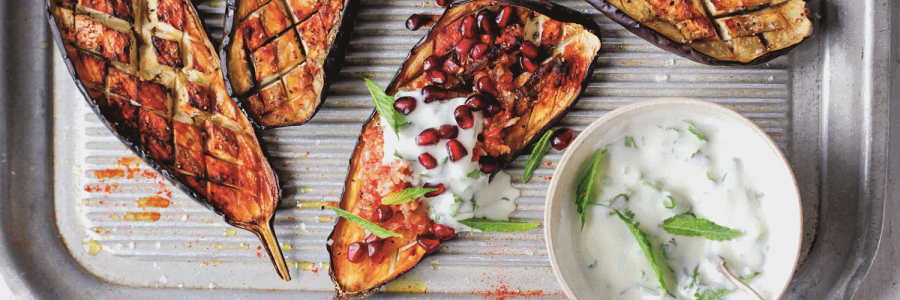
Baked aubergine with pomegranate

Serves 4

145 calories per serving

Middle-Eastern food inspires many of our recipes. The one here is a beautiful dish of contrasts, with the creamy, earthy, slightly bitter aubergine flesh being perfectly complemented by the light yogurt, fresh mint and sweet pomegranate seeds. Fresh herbs and spices reduce the need for salt when you’re flavouring food, whilst adding an extra nutritional boost to your dishes.

Ingredients

4 aubergines
1 tsp paprika
1 tsp olive oil
1 pomegranate
A pinch of ground sumac, to garnish

Tomato sauce

8 ripe vine tomatoes, roughly chopped
4 shallots, roughly chopped
1 fresh red chilli, seeded and roughly chopped 1 celery stick, roughly chopped
5 garlic cloves, roughly chopped
A handful of fresh flat-leaf parsley,
roughly chopped
2 sprigs of fresh thyme, leaves picked

Yoghurt dressing

1 tbsp plain soya yogurt
Grated zest and juice of 1 lemon
A handful of fresh coriander, finely chopped A handful of fresh mint, finely chopped, plus extra leaves to garnish
Salt and pepper

Method

1. Preheat your oven to 200°C/fan 180°C/gas 6.
2. Cut the aubergines lengthways in half. Score the flesh in a criss-cross pattern, cutting about 1cm
deep. Sprinkle with the paprika and some salt and pepper, and drizzle the olive oil over the flesh. Place on a baking tray and bake in the heated oven for 25 minutes until completely soft.
3. Meanwhile, make the tomato sauce. Combine all the ingredients in a blender and blitz for
30 seconds to create a chunky mixture. Transfer the mixture to a medium saucepan. Bring to
the boil, then simmer on medium/low heat
for 20 minutes, stirring occasionally.
4. Mix the yogurt with the lemon zest and juice,
coriander, mint and seasoning.
5. Remove the seeds from the pomegranate.
6. To serve, place two aubergine halves on each plate. Top with tomato sauce, then yogurt and, finally, pomegranate seeds. Garnish with mint leaves and sumac.

RICH IN

Vitamins B6 and C • Folate • Potassium • Lycopene • Fibre

USEFUL FOR

High cholesterol • High blood pressure • Constipation • Common cold • Depression • Prostate • PMS

The Detox Kitchen Bible out 7th May

Soothing tea

Soothing tea

Soothing tea (download as a PDF soothing-tea)

Serves 2

This tea is perfect for after dinner especially if you suffer from bloating. Mint offers relief by loosening the valve that connects your oesophagus to the gut and fennel has been used for centuries in many cultures as a traditional digestive aid (particularly Indian).

If you regularly suffer from indigestion and bloating then try eating little and often. Get into the habit of eating slowly and mindfully, chewing your food properly so as to not put too much strain on your digestive system.

Ingredients

1 tsp fennel seed
1 tsp caraway seed
1 handful fresh mint leaves

Method

1. Steep ingredients in boiling water for 5-10 minutes then serve.

This tea looks really effective served in a clear glass teapot and cups.


Download as a PDF (soothing-tea)