Year: 2016

Home / 2016 (Page 2)
Gluten-free chicken stir-fry with courgette noodles

Gluten-free chicken stir-fry with courgette noodles

Chicken stir-fry with courgette noodles

Serves 2

356 calories, 13.4g fat, 6g sat fat, 19.7g carb, 14.7g sugar, 33.5g protein, 11.5g fibre, 2g salt

Rich in: potassium, calcium, magnesium, iron, zinc, vitamins A, C and B complex


Veg-swaps are a health trend that is here to stay and offer a great way to replace carbohydrates in your recipes, which is useful if you’re trying to lose weight.  The bright colours in this dish mean you’re getting a great supply of valuable phytonutrients, which are pigments in plants that may help to protect the body from diseases such as those of the heart.  Shiitake mushrooms contain beta-glucan polysaccharides that have been shown to help enhance the immune system as well as vitamin D, which is lacking in many peoples diets, especially during the winter months.

Tamari is a gluten-free alternative to soy sauce and has a lovely rich flavour adding depth to the dish.  If you don’t eat meat then try adding a legume or pulse such as chickpeas or soya beans, which will add protein to the dish.  You could also throw in a handful of nuts such as cashews, pumpkin seeds or lentil sprouts for a little crunch. Furikake is a Japanese blend of sesame seeds and seaweed, which add an umami flavour to the dish as well as a source of iodine.


Ingredients


1 tbsp extra virgin coconut oil

1 large chicken breast, thinly sliced

1 lime, juiced

200g tenderstem broccoli, trimmed

1 red chilli, sliced thinly

1 inch piece of ginger, sliced into matchsticks

1/2 red onion, finely sliced

1 long red pepper, sliced into thin strips

2 garlic cloves, crushed

125g shiitake mushrooms, sliced

3 courgettes, julienned

1 tbsp coriander, chopped

2 tbsp tamari

1 tbsp ferukake


Method

  1. Heat the oil in a wok.  Once hot add the chicken and fry for 5 minutes until cooked through.
  2. Squeeze the lime juice into the wok and cook for a further 1 minute.
  3. Add the broccoli, chilli, ginger, onion, red pepper, garlic and mushrooms then fry for 3 minutes until tender.  Add a splash of water during cooking to steam the vegetables and help them to cook.
  4. Take the wok off the heat and stir in the courgette, coriander, tamari and ferukake.
  5. Divide between two plates and serve.


Download recipe as a PDF (chicken-stir-fry-with-courgette-noodles)

Turmeric chicken with Asian coconut slaw

Turmeric chicken with Asian coconut slaw

Great low calorie light supper option

Serves 4

340 calories, 9.9g fat, 4.7g sat fat, 16.9g carbohydrate, 13.3g sugar, 40g protein, 7.6g fibre


This nourishing salad contains many spices including turmeric, which has been shown to help reduce inflammation in the body as a result of its active ingredient called curcumin.  This salad is also rich in iron, magnesium and vitamins B6, C and A.   Red cabbage and carrots are rich in antioxidant phytonutrients including beta-carotene and anthocyanins that may help to reduce the risk of diseases such as heart disease and cancer.  If you don’t eat meat then try with a firm white fish such as monkfish or halibut.  This dish would also work well with firm tofu, which is a great alternative for vegans (replace the fish sauce with light soy or tamari sauce).


Ingredients


Spice Rub

 1 1/2  tbsp curry powder

1/2 tsp sea salt

1 tsp paprika

1/2 tsp ground cumin

1/2 tsp ground coriander

1 tsp turmeric

1/2 tsp ginger


4 large chicken breasts

1 garlic clove, crushed

2 tsp extra virgin olive oil  


Salad  

½ red cabbage, finely shredded

½ white cabbage, finely shredded   

½ cucumber, de-seeded and julienned

2 carrots, julienned  

1 handful of beansprouts

1 small handful of coriander, chopped

1 small handful of mint, chopped  

1 small handful of Thai Basil, chopped (leave out with if you can’t find it)

1 handful of raw roasted peanuts, lightly crushed


Dressing

1 tbsp fish sauce

100ml light coconut milk

1 tsp palm sugar (or Demerara)

1 lime, juiced

1 chilli, chopped

½ lemongrass, chopped

1 small garlic clove, chopped

1 small handful coriander


Method

  1. Combine the spices in a small bowl.
  2. Rub the chicken with the crushed garlic and olive oil.
  3. Place the chicken in a large bowl and add the spices. Combine well so that all the chicken is coated.
  4. Prepare the salad by combining the vegetables, herbs and peanuts in a large bowl.
  5. Prepare the dressing by placing the ingredients in a small blender and blitzing until smooth then set aside.
  6. Place a griddle pan on a medium heat and leave to heat up.
  7. Meanwhile, one at a time, place the chicken breasts on one half of a large sheet of clingfilm, fold the clingfilm over so that the spices are sealed in and gently bash with a rolling pin until about 1 cm thick.
  8. Place the breasts on the griddle and cook for 5 minutes on each side until cook through.
  9. Add the dressing to the salad and combine well.
  10. Serve one chicken breast on a plate with a generous mound of Asian slaw.
Moroccan turkey burgers with lemon yoghurt dressing

Moroccan turkey burgers with lemon yoghurt dressing


Perfect high-protein snack or light supper (download as PDF moroccan-turkey-burgers-with-lemon-yoghurt-dressing)

Serves 4 (three burgers) per serving

230 calories per serving


These burgers are high in protein and low in calories, which makes them the perfect dish if you’re trying to lose weight.  Protein helps to keep you feeling fuller for longer. Each serving of this dish also supplies a rich-source of B vitamins that are important for healthy skin and energy metabolism.


Ingredients

400g turkey mince

2 spring onions, finely sliced

1 red chilli, finely chopped

1 garlic clove, minced

1 small handful of flat-leaf parsley, finely chopped

1 small handful of coriander, finely chopped

1 courgette, grated

1 tsp Ras El Hanout

1 tsp ground cumin

Sea salt

Black pepper

Light olive oil

12-15 Iceberg lettuce leaves


Dressing

150ml low fat plain yoghurt

½ lemon, juiced


Method

  1. Preheat the over to 180C.
  2. Add the turkey mince to a large bowl and break up.
  3. Add the spring onions, chilli, garlic, herbs, courgette, spices, salt and pepper to the bowl and combine well.
  4. Form the mixture into 12 balls and press each one down to form a burger shape.
  5. Pour 100ml of oil into a large frying and heat. Add the burgers and shallow fry for a few minutes each side until browned.
  6. Remove the burgers from the pan and then transfer to a plate topped with kitchen towel.
  7. Place the burgers on a large roasting tin and cook for 10 minutes until cooked through.
  8. Remove the burgers from oven.
  9. Prepare the dressing by adding the ingredients to a small bowl and whisking with a fork.
  10. Serve three burgers per person with lettuce leaves to use as a wrap. Top the burgers with lemon yoghurt dressing.  You could also serve with a small serving of grain-based salad such as quinoa or brown rice.

Download as PDF (moroccan-turkey-burgers-with-lemon-yoghurt-dressing)


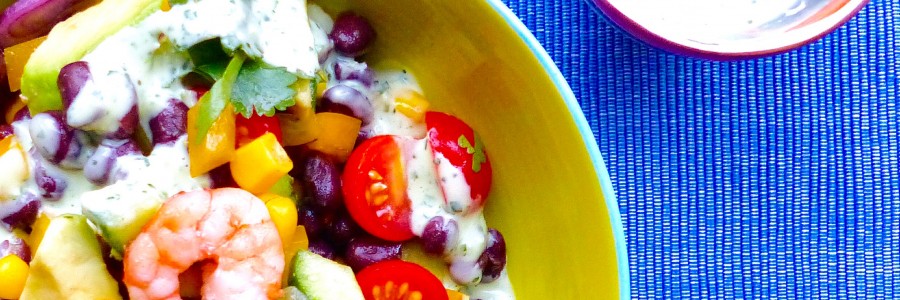
Mexican prawn and black bean salad

Mexican prawn and black bean salad

Eye-healthy super salad (download as PDF eye-healthy-super-salad)

480 calories per serving


This yummy salad is incredibly nutritious, providing a rich source of magnesium, iron, selenium, vitamin E, B vitamins and vitamin C.  The yellow peppers and avocado also supply a source of lutein and zeaxanthin that are shown to be beneficial for the health of your eyes.  Including beans in your diet also supplies a great source of fibre, which is lacking in many peoples diets.  Fibre is not only essential for maintaining good digestion but also helps to reduce the risk of heart disease, balance blood sugar levels and assist in weight loss.


Ingredients

175g king prawns

1/2 x 400g can black beans, drained and rinsed

1 small yellow pepper, finely diced

1/2 small cucumber, deseeded and chopped

100g cherry tomatoes, halved

1 large avocado, de-stoned, peeled and chopped

1/2 small can sweetcorn (reduced sugar and salt)

1 small handful of coriander, chopped

Salt

Pepper


Dressing

50g low fat, plain yoghurt

1 lime, juiced

1 small handful of coriander

1 spring onion, chopped

½ jalepeno (or green) chilli pepper, chopped

40ml olive oil

½ tsp salt

1 tsp honey


Method

  1. Heat a little olive oil in a small frying pan. Add the prawns and cook for 3 minutes over a high heat until pink.  Take the prawns off the heat and leave to cool.  You can also use cooked prawns if you like.
  2. Add the beans, vegetables and coriander to a large bowl and combine well.  Season with a little salt and pepper.
  3. To prepare the dressing, place all the ingredients in a blender and blitz until smooth.
  4. Divide the salad between two bowls and serve with the dressing on the side.

Download as PDF (eye-healthy-super-salad)

Cooking seared tuna with Fighting Fifty

Cooking seared tuna with Fighting Fifty

So, I have previously posted the delicious recipe for sesame seared tuna with Asian green salad but had the chance to cook the dish with Tracey McAlpine from Fighting Fifty.  Always love cooking with Tracey as we have such as laugh.

What you need to know about tuna

Tuna belongs to the oily group of fish along with salmon, trout, mackerel, sardines and herring.  These fish are a rich source of omega 3, which research has shown can have a positive effect on many areas of health.  Tuna, along with other oily fish is beneficial for heart health and although it is not entirely clear exactly how omega 3 fatty acids benefit the heart, the results show they do.  It is also thought that the heart health benefits may be a combination of omega 3 fatty acids and some other component of oily fish.

Omega 3 fatty acids can help to reduce inflammation in the body which is thought to be at the root of many diseases including that of the heart.  These fats also help to increase the amount of good (HDL) cholesterol and reduce overall triglycerides in the body as well as thin the blood, which also benefits the health of your heart.

Omega 3 has also been associated with good skin and helps to maintain healthy skin cell membranes that keep it supple and moisturised.  The anti-inflammatory effect of these fats may also help with skin conditions such as psoriasis.

It is recommended that we try and eat about two servings of oily fish each week in order to glean adequate omega 3.  These fatty acids are referred to as essential as they must be obtained from the diet.  However, you should try and limit your intake to no more than four servings each week given the fact that oily fish have a high level of heavy metals, which may build up over time.

Tuna is also rich in vitamin A, which is important for healthy skin, immune system and normal vision.  Iron is also an important mineral in the diet and food surveys show that up to 23% of women in the UK have inadequate intakes, which can result in tiredness and fatigue.  Tuna contains a useful 10% of the RDA for iron.  Another key mineral is magnesium that plays a key role in hundreds of chemical reactions in the body and is involved in muscle relaxation and the conversion of food into energy (tuna contains 17% of the RDA per serving).

Tuna are also a rich source of many B vitamins, in particular B12 (over 200% of the RDA).  B vitamins are essential for the health of your skin and required for energy metabolism.  Low intakes of B vitamins can result in tiredness and fatigue.

Try this recipe for yourself!


Wheat-free hot cross buns and the benefits of rye flour

Wheat-free hot cross buns and the benefits of rye flour

So, after a lot of disasters, which included many batches of hot cross rocks! I finally managed to produce a batch of edible buns!  These were created for a PR agency who are trying to promote the use of rye flour.

I’m not afraid of carbohydrates in the diet and spend quite a lot of time sticking up for the health benefits of including this food group in the diet.  I don’t mean promoting the consumption of sugary drinks and mars bars,  but the inclusion of small amounts of good quality wholegrain foods that add valuable fibre, B vitamins, magnesium and iron to the diet.

We don’t need a huge amount of carbohydrate in the diet and what you need can be manipulated based on your health goals.  If you’re a healthy weight and very active, training hard, then they’re a valuable source of immediate energy in the form of glucose (the body’s preferred source of energy), that helps to prevent fatigue by storing glycogen in the muscles and liver.  However, overloading the body with carbohydrate foods as well as leading an inactive lifestyle, will lead to weight gain and if you’re trying to lose weight then cutting back is a useful tactic given the fat storage effect of insulin.  Limiting carbohydrates in the diet to no more that 50g per day, which equates to 2 slices of bread or 200g of cooked wholegrain pasta, rice or quinoa, can force the body into utilising fat stores as an energy source (a process called ketosis).   You don’t want to remain in this state indefinitely, but studies show ketogenic diets are an effective way to reduce body fat and ultimately overall body weight.

Foods made using rye flour such as pumpernickel are a good choice of carbohydrate given their high fibre content.  Most people don’t eat enough fibre and this nutrient has been shown to protect against heart disease and bowel cancer as well as helping to control blood sugar levels and maintain fullness between meals.  Rye is also a good source of magnesium, iron , zinc, manganese and copper as well as B vitamins such as thiamin, riboflavin and B6, which are all essential for the conversion of food into energy used by cells as well as maintaining healthy skin and nervous system.

Rye is also wheat-free, although not suitable for coeliacs or those with gluten sensitivity as it still contains gluten.  Whilst there are a significant number of people who experience bloating and digestive upset when they eat too much wheat, a diagnosed allergy is very rare.  The most dangerous form of wheat allergy occurs in people after exercising within a few hours of eating these foods.  Exercise-induced changes in the body either trigger an allergic reaction or worsen the immune response to a wheat protein.  This condition normally results in life-threatening anaphylaxis.

These hot cross buns are made using rye and gluten-free flours.  They’re not as fluffy and light as your usual hot cross buns and fail to rise in the same way but still taste great.  I also like the homemade look of these hot cross buns! You can play around with the ingredients and experiment with different flavours such as cranberry and orange or ginger and apple.  I have switched the caster sugar in this recipe for honey (still a sugar but with more depth of flavour) and used less of it so they contain about half the sugar of traditional shop-bought buns.

Adding in dried fruit and walnuts helps to boost the nutritional content of the buns although they should still be seen as a sweet treat.  The best way to enjoy them is toasted with a little butter.  I have no problem with using butter as it’s a much more natural food (and tastier) than chemically produced margarines that are high in omega 6.  Although butter is high in saturated fat, we are now beginning to question the effect on health (especially heart health) of foods naturally high in this type of fat, although it’s still high in calories so you need to go easy!


Apple, walnut and cinnamon hot cross buns

Makes 12

250 calories

10.3g fat, 3g sat fat, 35.2g carb, 9g sugar, 7.4g protein, 2.7g fibre

Source of magnesium, selenium, B6, B12 and folate


Ingredients

Buns

250g wholemeal rye flour

200g gluten-free white flour

1 tsp salt

1 tsp ground mixed spice

1 tsp ground cinnamon

½ tsp ground ginger

85g butter

2 x 7g sachets of easy-blend dried yeast

325ml almond milk, slightly warmed

4 medium eggs, beaten

3 tbsp honey

2 small apples, peeled and chopped

85g sultanas

30g walnuts, crushed


Cross glaze

100g gluten-free white flour

2 tbsp water


Method

  1. Grease two large baking sheets and lightly dust with rye flour.
  2. Add the flours, salt and spices to a large bowl and combine.
  3. Add the butter and rub into the flour mixture until it resembles fine breadcrumbs.
  4. Stir in the yeast the add the milk, eggs and honey then beat with a wooden spoon until the batter is smooth.
  5. Stir in the apples, sultanas and walnuts until evenly dispersed.
  6. Use a tablespoon and drop the mixture onto the baking sheets making sure each one is widely spaced. Use a knife dipped in water to shape each one into a round shape.
  7. Cover each of the baking sheets with greased cling film and leave somewhere warm to rise for 40 minutes until doubled in size and small holes appear on the surface. Remove the cling film.
  8. Preheat the oven to 200C.
  9. In a small bowl combine 100g gluten-free flour with 2 tbsp of water to form a thick paste. Transfer to a piping bag and pipe crosses on the buns.
  10. Place the baking sheets in the centre of the oven and cook for 30 minutes. They will not rise like a usual hot cross bun as they have been made using rye and gluten-free flours.
  11. Once cooked transfer to a wire rack. In a small bowl, combine a little honey and water then brush lightly over each bun whilst still hot to create a glaze.


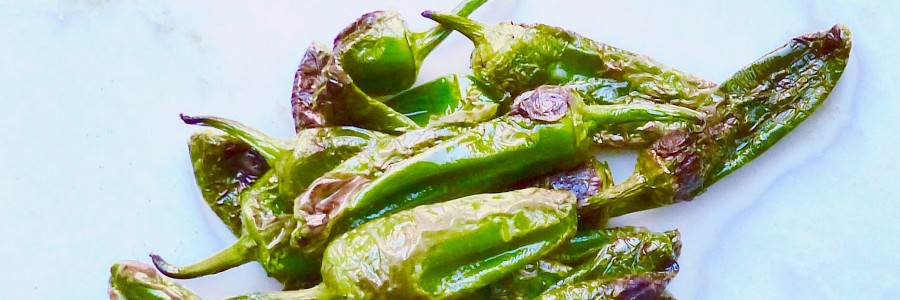
Padron peppers with smoked paprika and flaked sea salt

Padron peppers with smoked paprika and flaked sea salt

Great way to up your (at least) five-a-day

This super-quick dish is a tasty way to get a serving of veggies into your daily diet. I love to make these peppers as a snack whilst working at home during the day or when peckish after supper. Peppers are one of the richest sources of vitamin C, which acts a powerful antioxidant in the body, protecting cells from free radical damage. Vitamin C is also essential for the formation of collagen, which is a key component of connective tissues in the body as well as that of the skin (provides support and elasticity), and also helps with wound healing. Most of us get more than enough of this vitamin from fruits and vegetables in the diet. A single serving of these peppers provides over 150% of the RDA as well as a source of B6 and folate.

Serves 2

70 calories per serving

Ingredients

1 tbsp extra virgin olive oil
200g Padrón peppers
1 tsp flaky sea salt
½ tsp smoked paprika

Method

  1. Heat the oil in a large non-stick pan over a high heat until just smoking.
  2. Add the peppers and toss occasionally until the skins blister and the peppers are softened. They should be well coloured all over.
  3. In a small bowl, combine the salt and paprika.
  4. Serve on a plate or wooden board along side the salt/paprika mix. Eat by dipping the peppers in the paprika salt.
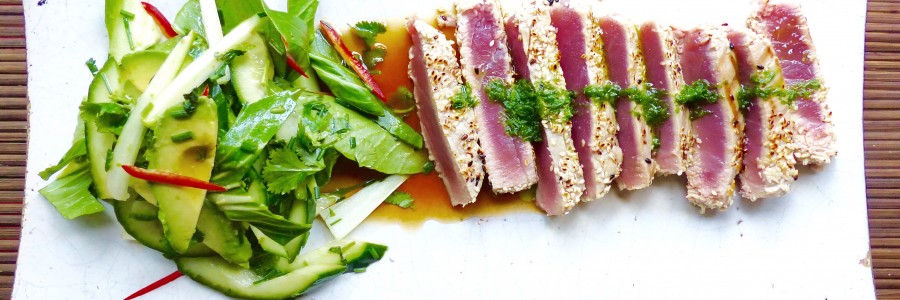
Sesame crusted tuna with Asian salad and soy/mirin dressing

Sesame crusted tuna with Asian salad and soy/mirin dressing

Japanese-style lunch bursting with omega 3 (download as a PDF japanese-style-tuna-with-asian-salad)

Don’t be scared off by the long list of ingredients as this dish is simple to prepare and is beyond tasty and fresh. Tuna is a rich source of omega 3 fatty acids that have are thought to benefit the heart by increasing HDL cholesterol and reducing inflammation in the body.

These fatty acids are also good for the skin by supporting cell membranes that act as a passageway to nutrients in and waste out of cells as well as retaining water that moisturises and plumps the skin. This dish is also a good option for those trying to cut down the carbs in their diet, but you can serve with brown rice or quinoa as an option.


Serves 2

480 calories per serving (using 1 tbsp of chive oil)


Ingredients

250g fresh tuna (the best quality you can find)

25g sesame seeds


Salad

1 medium avocado

½ cucumber

1 head of pak choy

1 tbsp chives, chopped

Small handful of coriander, finely chopped

A few mint leaves, finely chopped

2 tsp sesame oil

½ lime, juiced


Dressing


30ml reduced sodium, light soy sauce

30ml mirin

2 tsp rice wine vinegar
Chive oil
120ml light olive oil

Large handful of chives, finely chopped


Method


  1. Place the sesame seeds on a small plate.
  2. Brush the tuna with a little light olive oil and roll in the sesame seeds until all the sides are covered then set aside.
  3. Prepare the salad. Cut the avocado in half, remove the stone then peel off the skin. Cut each half into thin slices. Half the cucumber and remove the seeds then cut each half into thin slices diagonally. Trim the bottom off the pak choy and wash the leaves then dry and slice each leaf into thin strips. Add the avocado, cucumber and pak choy to a medium-sized bowl and gently combine. Add the chives, coriander and mint along with the sesame oil and lime juice then continue to combine.
  4. Prepare the dressing by adding the ingredients to a small bowl and whisking with a fork.
  5. For the chive oil, place the oil and chives in a small blender and whizz for 30 seconds. This will make a larger quantity of oil than required but you can keep it in a container in the fridge.
  6. Heat a little oil in a large, non-stick frying pan or griddle until smoking hot. Place the tuna on the pan and cook for one and a half minutes on each side (medium-rare).
  7. To serve the dish, cut the tuna into thin slices and place on a long, rectangular, shallow-sided dish. Mound the salad at one end of the dish. Pour the soy dressing over the tuna and salad the drizzle a little of the chive oil over the tuna (to taste).


Download as a PDF (japanese-style-tuna-with-asian-salad)


Moroccan butternut squash and red lentil soup

Moroccan butternut squash and red lentil soup

High fibre soup

Butternut squash is a very rich source of beta-catorene, which is pant chemical that gives its bright orange colour.  This pigment also acts as a profile antioxidant in the body that helps to reduce oxidative damage from free radical (caused by environmental factors). This soup is also high in fibre that helps maintain good digestion and has been shown to help reduce the risk of heart disease, control blood glucose levels as well as help with weight maintenance.

Ras El Hanout is a Moroccan spice made from a blend of coriander, ginger, paprika, allspice, cardamon, cloves and rose petals.


High vis soup

Serves 2 (generous servings)

Ingredients

1 small butternut squash, peeled, deseeded and cut in to chunks

2 garlic cloves

1 tbsp extra virgin olive oil

1 small onion, finely chopped

100g red lentils

2 tsp Ras El Hanout

Small pinch of dried chillies

800ml vegetable stock

Sea salt

Black pepper


To serve

Sunflower and pumpkin seeds

Pomegranate arils

Fresh mint, finely chopped


Method

  1. Pre heat the oven to 200C.
  2. Season the squash with salt and pepper then wrap in foil with the garlic. Place the foil package on a baking sheet and cook in the oven for 20 minutes until tender then remove from the oven and set aside.
  3. Heat the oil in a large saucepan and add the onion.  Fry for 5-8 minutes until soft.  Add the Ras El Hanout and dried chillies then cook for a further 1 minute.
  4. Add the squash, garlic and lentils to the pan and stir.  Pour in the stock and bring to the boil.
  5. Once boiled turn down the heat and simmer for 15 minutes until the lentils are tender.
  6. Season with salt and pepper.
  7. Take the soup off the heat and blend with a stick blender until smooth.  If the soup is too thick then add water until you get your desired consistency (soup should be a thick consistency).
  8. Divide the soup between two bowls and garnish with seeds, pomegranate and chopped mint.


Soup in a row